
Nanomaterials:
A giant leap for healthcare

Leadership
Co-Investigators and collaborators

Prof Nguyễn T.K. Thanh
Professor Nguyễn Thị Kim Thanh, MAE, FRSC, FInstP, FAPS, FIMMM FRSB held a prestigious Royal Society University Research Fellowship (2005-2014). In 2019, she has been honoured for her achievements in the field of nanomaterials, and was awarded highly prestigious Royal Society Rosalind Franklin Medal. She was RSC Interdisciplinary Prize winner in 2022. She was awarded SCI/RSC Colloids Groups 2023 Graham Prize Lectureship to recognise an outstanding mid-career researcher in colloid and interface science. She is one of only 12 recipients globally of 2023 Distinguished Women in Chemistry/Chemical Engineering Awards, bestowed by the International Union of Pure and Applied Chemistry (IUPAC). She was elected as a member of Academia Europaean in April 2024.


Dr Guido Bolognesi
Dr Bolognesi is an Associate Professor in Physical Chemistry. His research focuses on transport processes and interfacial phenomena in soft matter and biological systems, with the aim of developing new technologies for biosensing, synthetic biology, therapeutics and drug delivery. His group takes an interdisciplinary approach, combining fluid mechanics, microfluidics, optics, and interface and colloid science. He has received multiple research grants from UKRI, the Royal Society, and the European Innovation Council. His group has developed novel strategies to manipulate nanoparticles in confined environments by harnessing chemical energy in saline solutions, with applications in nanoparticle separation, characterisation, and lateral flow diagnostics.
Prof Umber Cheema
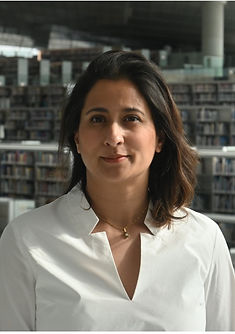
Professor Cheema is the Head of the UCL Centre for 3D Models of Health and Disease. Her research interests focus on 3D bio-engineering and developing biomimetic tissue models, with a specific aim for these to be used to test novel therapeutic interventions. Professor Cheema was part of the team to develop a patent-protected plastic compression technique for collagen I hydrogels used to develop biomimetic tissue models, including 3D tumouroids, which are in vitro models of solid tumour growth. Here the spatial micro-architecture of a tumour and its surrounding stroma has been reproduced in vitro, with evidence of tumour invasion into surrounding 'normal' tissue and interaction of the cancer with engineered vascular networks. The development of humanised in vitro models is a key aspect of her research as well as incorporation of patient derived cells.

Prof Quentin Pankhurst
Quentin Pankhurst is a Professor of Physics and Director of the Healthcare Biomagnetics Laboratory at University College London. He is a co-founder of three spinout companies: Endomagnetics Ltd in 2007; Resonant Circuits Limited in 2009; and MediSieve Ltd in 2014. To date these companies have generated 200+ FTE new jobs in the UK, Europe, and the USA. Quentin was born and raised in New Zealand and has lived in England since 1983.

Prof MD Martin Forster
Dr Forster is a Professor of Cancer Medicine at University College London (UCL) and Consultant Medical Oncologist at University College London Hospitals NHS Foundation Trust. He specialises in Thoracic and Head and Neck Cancers and has a particular interest in drug development, running a broad portfolio of studies from first-in-human to registration Phase III trials. He runs a research-based practice, being Principal Investigator or Chief Investigator for over 100 early and late-phase clinical trials since his appointment to UCL in 2009. He is UCL ECMC Academic Lead and UCLH Clinical Lead for Cancer Research. During his Oncology training he completed a PhD in biomarker development at the Institute of Cancer Research and he collaborates broadly with national and international groups involved in translational research. He has published on topics ranging from cancer biology to translational oncology and clinical studies. He is Joint Lead for the Clinical Trials Theme of the Cancer Research UK Lung Cancer Centre of Excellence

Dr Rebecca Roylance
Dr Rebecca Roylance is a medical oncologist specialising in the medical management of breast cancer. She undertook a PhD at Imperial Cancer Research Fund (now Cancer Research UK) investigating the genetics of breast cancer before completing specialist oncology training whilst a Cancer Research UK Clinician Scientist. On completing training she was awarded a HEFCE Senior Clinical Fellowship and took up a Consultant post at St Bartholomew’s Hospital. In 2015 she took up the role of Consultant Oncologist at UCLH NHS Foundation Trust and Honorary Associate Professor at the UCL Cancer Institute. Her clinical and research interests are solely in the field of breast cancer. She is active in clinical research and leads on a number of breast cancer clinical trials both as Chief and Principle Investigator, and is a member of a number of clinical trial steering and management groups. Nationally she has been a member of the NCRI breast clinical studies group and a member of the oligometastatic breast cancer subgroup, and currently sits on the UK SACT Board.

Prof Asterios Gavriilidis
Asterios Gavriilidis, CEng, FIChemE, is Professor of Chemical Reaction Engineering in the Chemical Engineering department at University College London. He has long standing expertise on catalytic reaction engineering and his group has developed a range of intensified reactors, for applications in bulk chemicals as well as fine chemicals/ pharmaceuticals. He has also been working in microreaction technology. This work takes advantage of unique properties of miniaturised devices and the dominance of different forces in microscale for process intensification and obtaining information under well-controlled conditions. His group has designed microreactors for nanoparticle manufacturing for use in antimicrobial surfaces, cancer hyperthermia treatment, and diagnostics.

Prof Federico Galvanin
Federico Galvanin is Professor and Deputy Head of Operations at the UCL Department of Chemical Engineering, where he leads the Galvanin System Identification Group (GSIG). His research focuses on systems-based optimal experimental design methods to build predictive models of chemical processes with minimal cost and time. A member of the Sargent Centre for Process Systems Engineering, he has pioneered autonomous reaction platforms that combine physics-based modelling with AI and ML to accelerate chemicals and nanoparticles synthesis. He has published more than 120 journal and conference papers on the development of methods and software tools for model identification, securing more than £15M in funding from UKRI and industry partners from pharma, fine chemicals and nuclear sectors, advancing the integration of digital tools in process systems engineering applications.
Dr Linh Nguyen
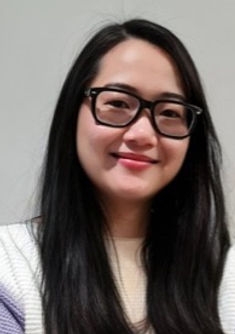
Dr Linh Nguyen is an Associate Professor in Biomaterials and Tissue Engineering at the UCL Eastman Dental Institute. Her research focuses on designing advanced materials that can help the body repair and regenerate damaged tissues, particularly in oral health. She develops injectable biomaterials and nanotechnology-based systems that interact with cells to promote healing while reducing infection. By combining laboratory science with clinically relevant models, her work aims to bridge the gap between fundamental research and real-world healthcare applications. Dr Nguyen has published over 60 scientific papers and secured major funding from organisations including the Royal Society, Innovate UK, EPSRC. At the Royal Society Summer Science Exhibition 2026, she is excited to share how “smart” materials able to respond to changes such as temperature, can be used in innovative treatments, from tissue regeneration to emerging cancer therapies.

Dr Maximilian Besenhard
Dr Maximilian O. Besenhard is Lecturer in Digital Manufacturing of Advanced Materials in the Department of Chemical Engineering at University College London. With experience across academia and industry, his work centres on automation and autonomous systems for chemical and materials engineering. His group develops integrated, self-driven laboratory platforms that combine reactors, advanced analytics, and hybrid mechanistic–AI models to enable truly intelligent experimentation. The research focuses on separation technologies, process development, and materials discovery, with particular emphasis on nanoparticles for biomedical applications. Beyond high-throughput screening, the aim is to establish robust synthetic and downstream purification strategies that deliver deep process understanding and enable knowledge-driven optimisation, ultimately translating innovations from laboratory discovery to manufacturing-relevant scale.

Dr Georgios Gkogkos
Dr Georgios Gkogkos is postgraduate research associate in the department of Chemical Engineering, UCL, with broad experience in reactor design, modelling, and manufacturing, for applications in nanomaterials synthesis and biocatalysis . He has developed several reactor types for continuous flow manufacturing of nanomaterials, enabling rapid mixing and fouling resistance. He is constantly looking into the development of new reactor technologies combining simulations and experiments.